Ventricular Septal Defect (VSD) Treatment by Pediatric & Adult Congenital Heart Surgeon
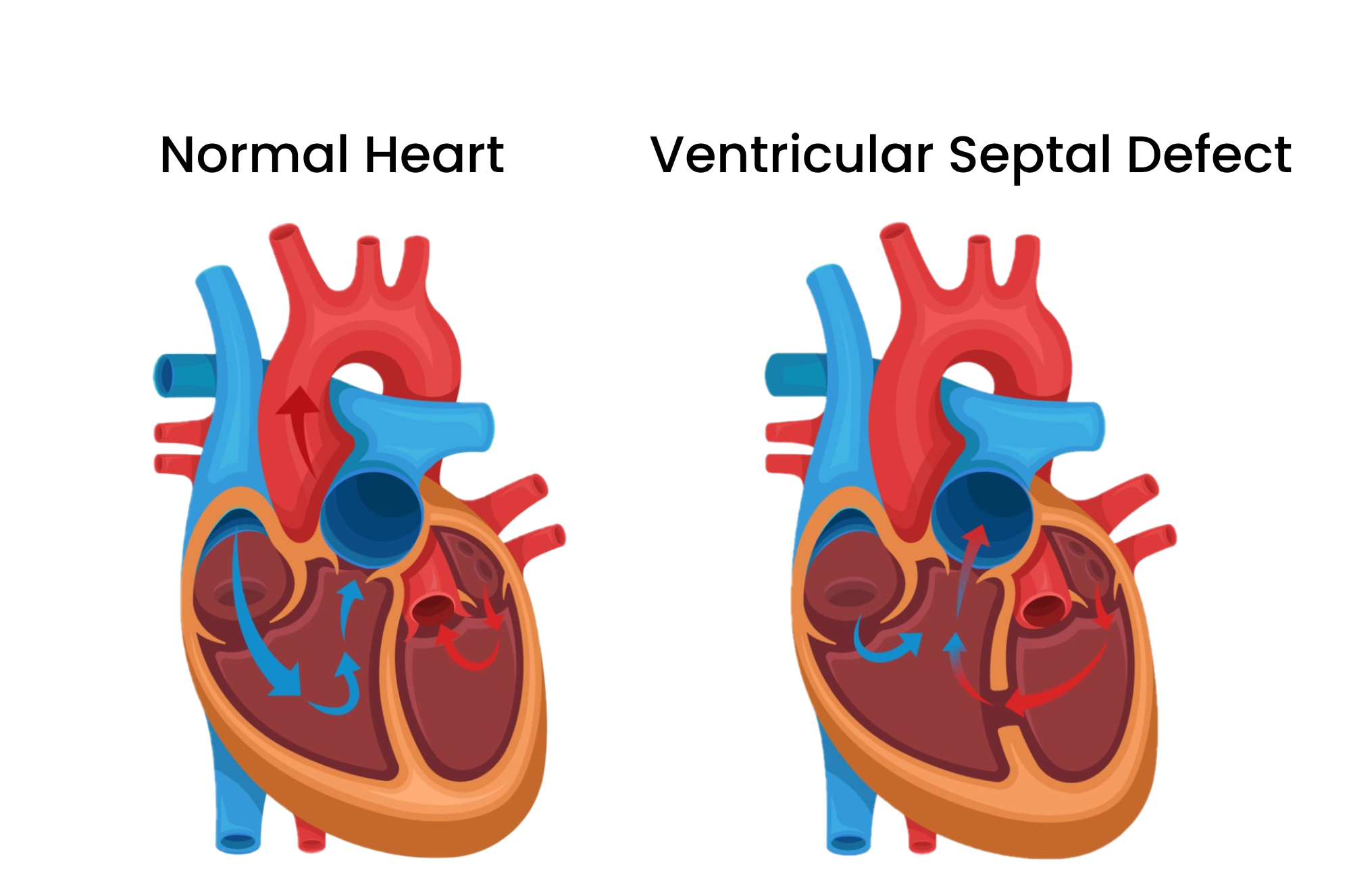
A Ventricular Septal Defect (VSD) is a congenital heart defect characterized by a hole in the wall (septum) that separates the two lower chambers of the heart, known as the ventricles.
This opening allows oxygen-rich blood from the left ventricle to mix with oxygen-poor blood in the right ventricle, causing the heart and lungs to work harder than normal.
VSD is one of the most common congenital heart defects seen in infants and children, but it can also be diagnosed in adults.
Types of Ventricular Septal Defect
VSDs are classified based on their location within the ventricular septum.
- Perimembranous VSD
The most common type, located near the heart valves. - Muscular VSD
Found in the muscular portion of the septum and may occur as multiple small holes. - Inlet VSD
Located near the tricuspid and mitral valves. - Outlet VSD
Found near the pulmonary and aortic valves.
Causes of VSD
VSD develops during fetal heart formation before birth. In most cases, the exact cause is unknown.
Risk factors may include:
- Genetic syndromes
- Family history of congenital heart disease
- Maternal infections during pregnancy
- Diabetes during pregnancy
- Certain medications or alcohol exposure during pregnancy
Symptoms of Ventricular Septal Defect
Symptoms depend on the size of the defect and the amount of blood flow through the opening.
Symptoms in Infants and Children
- Rapid breathing
- Difficulty feeding
- Poor weight gain
- Excessive sweating
- Frequent chest infections
- Fatigue during activity
Symptoms in Adults
- Shortness of breath
- Fatigue
- Heart murmur
- Irregular heartbeat
- Reduced exercise tolerance
Small VSDs may not cause symptoms and are sometimes detected during routine examinations.
Complications of Untreated VSD
If left untreated, moderate or large VSDs may lead to serious complications such as:
- Pulmonary hypertension
- Heart failure
- Valve damage
- Arrhythmias
- Delayed growth in children
- Increased risk of infections in the heart
Early diagnosis and timely treatment are essential to avoid long-term complications.
Diagnosis of VSD
A Pediatric & Adult Congenital Heart Surgeon may recommend several tests to confirm the diagnosis and evaluate the severity of the defect.
Diagnostic Tests Include:
- Echocardiography (2D Echo)
- ECG
- Chest X-ray
- Cardiac MRI or CT scan
- Cardiac catheterization
- Pulse oximetry
These tests help assess heart function and determine the best treatment approach.
Treatment Options for VSD
Treatment depends on the size of the defect, symptoms, and overall heart health.
- Observation and Monitoring
Small VSDs may close naturally during childhood and only require regular follow-up. - Medications
Medicines may help manage symptoms such as:
- Fluid overload
- Rapid heartbeat
- Heart failure symptoms
- Device Closure
Certain VSDs can be treated using minimally invasive catheter-based device closure techniques.
Benefits of Device Closure:- No large surgical incision
- Faster recovery
- Reduced hospital stay
- Less discomfort
- VSD Closure Surgery
Large or complex VSDs often require open-heart surgery performed by an experienced congenital heart surgeon.
Surgical repair may involve:- Stitch closure
- Patch repair using special medical material
Pediatric VSD Surgery
Children with significant VSD may require early surgery to prevent lung damage and support healthy growth and development.
Advanced pediatric cardiac surgery techniques ensure:
- Safe correction of the defect
- Better heart function
- Improved long-term outcomes
Adult Congenital VSD Treatment
Some adults may have an undiagnosed VSD or residual defect from childhood. Adult congenital heart specialists provide expert care for adults with congenital heart disease.
Treatment can improve:
- Breathing capacity
- Energy levels
- Heart performance
- Quality of life
Recovery After VSD Closure
Most patients recover successfully after VSD treatment.
Recovery Guidelines:
- Follow prescribed medications
- Attend scheduled follow-up visits
- Maintain a heart-healthy lifestyle
- Gradually return to physical activities
- Monitor for symptoms as advised by your doctor
Children often resume normal activities within a few weeks after surgery.