Interrupted Aortic Arch (IAA) Repair by Pediatric Surgeon
Interrupted Aortic Arch (IAA) is a rare and life-threatening congenital heart defect in which a portion of the aorta — the main artery carrying oxygen-rich blood from the heart to the body — is completely disconnected or missing.
Because the aortic arch is interrupted, blood cannot flow normally from the heart to the lower part of the body. This condition severely affects circulation and usually becomes critical soon after birth.
Interrupted Aortic Arch is often associated with other congenital heart defects, especially:
- Ventricular Septal Defect (VSD)
- Patent Ductus Arteriosus (PDA)
- Truncus Arteriosus
- DiGeorge syndrome
IAA requires urgent diagnosis and specialized surgical treatment by an experienced Pediatric Surgeon.
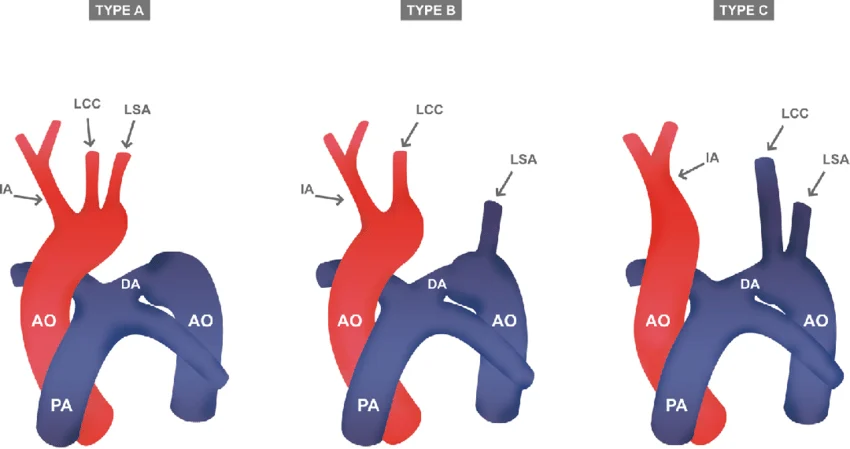
Types of Interrupted Aortic Arch
IAA is classified based on the location of the interruption.
- Type A:
The interruption occurs after the left subclavian artery. - Type B:
The interruption occurs between the left carotid artery and left subclavian artery. This is the most common type. - Type C:
The interruption occurs between the innominate artery and left carotid artery. This is the rarest form.
Causes of Interrupted Aortic Arch
IAA develops during fetal heart formation before birth. The exact cause is often unknown.
Risk Factors Include:
- Genetic abnormalities
- Chromosomal disorders such as DiGeorge syndrome
- Family history of congenital heart disease
- Poor fetal heart development
Symptoms of Interrupted Aortic Arch
Symptoms usually appear within the first few days of life, especially after the ductus arteriosus begins to close.
Common Symptoms in Newborns Include:
- Severe weakness
- Rapid breathing
- Pale or bluish skin
- Poor feeding
- Cold legs and feet
- Weak pulses in the lower body
- Low blood pressure
- Shock
- Heart failure symptoms
IAA is a medical emergency and requires immediate treatment.
Why Interrupted Aortic Arch is Dangerous
Without treatment:
- Blood flow to the lower body becomes critically reduced
- Organs may not receive enough oxygen
- Heart failure can rapidly develop
- The condition can become fatal within days
Early diagnosis and urgent surgery are essential for survival.
Diagnosis of Interrupted Aortic Arch
A specialized Pediatric Surgeon uses advanced cardiac imaging to confirm the diagnosis.
Diagnostic Tests Include:
- Echocardiography (2D Echo)
- ECG
- Chest X-ray
- Pulse oximetry
- Cardiac CT angiography
- Cardiac MRI
- Cardiac catheterization
These tests help evaluate the anatomy of the aortic arch and associated heart defects.
Emergency Treatment Before Surgery
Newborns with IAA often require immediate intensive care support before surgery.
Supportive Treatment May Include:
- Prostaglandin infusion to keep the ductus arteriosus open
- Oxygen therapy
- Mechanical ventilation
- Medications to support heart function
- Neonatal cardiac intensive care
These treatments help stabilize circulation before definitive surgical repair.
Interrupted Aortic Arch Repair Surgery
Open-heart surgery is the definitive treatment for IAA.
Surgical Goals:
- Reconnect the interrupted portions of the aorta
- Restore normal blood flow to the body
- Repair associated heart defects such as VSD
- Improve overall heart function
The surgery is usually performed during the newborn period or early infancy.
Pediatric IAA Surgery
Early surgical correction significantly improves survival and long-term outcomes.
Benefits of Early Surgery:
- Restores blood flow to the body
- Prevents organ damage
- Improves heart function
- Supports healthy growth and development
Advanced neonatal cardiac surgery and pediatric ICU care have greatly improved surgical success rates.
Risks and Complications
Like all complex congenital heart surgeries, IAA repair may involve certain risks.
Possible Risks Include:
- Bleeding
- Infection
- Narrowing of the repaired aorta (recoarctation)
- Arrhythmias
- Heart failure
- Neurological complications
Close postoperative monitoring helps reduce complications and improve recovery.
Recovery After IAA Repair
Recovery depends on the severity of the condition and associated heart defects.
Recovery Guidelines:
- Monitoring in pediatric cardiac ICU
- Regular echocardiograms
- Blood pressure monitoring
- Nutritional support
- Lifelong congenital heart follow-up
Many children recover well and achieve improved heart function after successful surgery.
Long-Term Outlook After IAA Repair
Most children require long-term follow-up with congenital heart specialists.
Long-Term Care Includes:
- Monitoring aortic arch growth
- Blood pressure management
- Evaluation for residual narrowing
- Heart function monitoring
- Lifelong congenital heart care in some cases
Early treatment greatly improves long-term survival and quality of life.