Total Anomalous Pulmonary Venous Drainage (TAPVD) Treatment
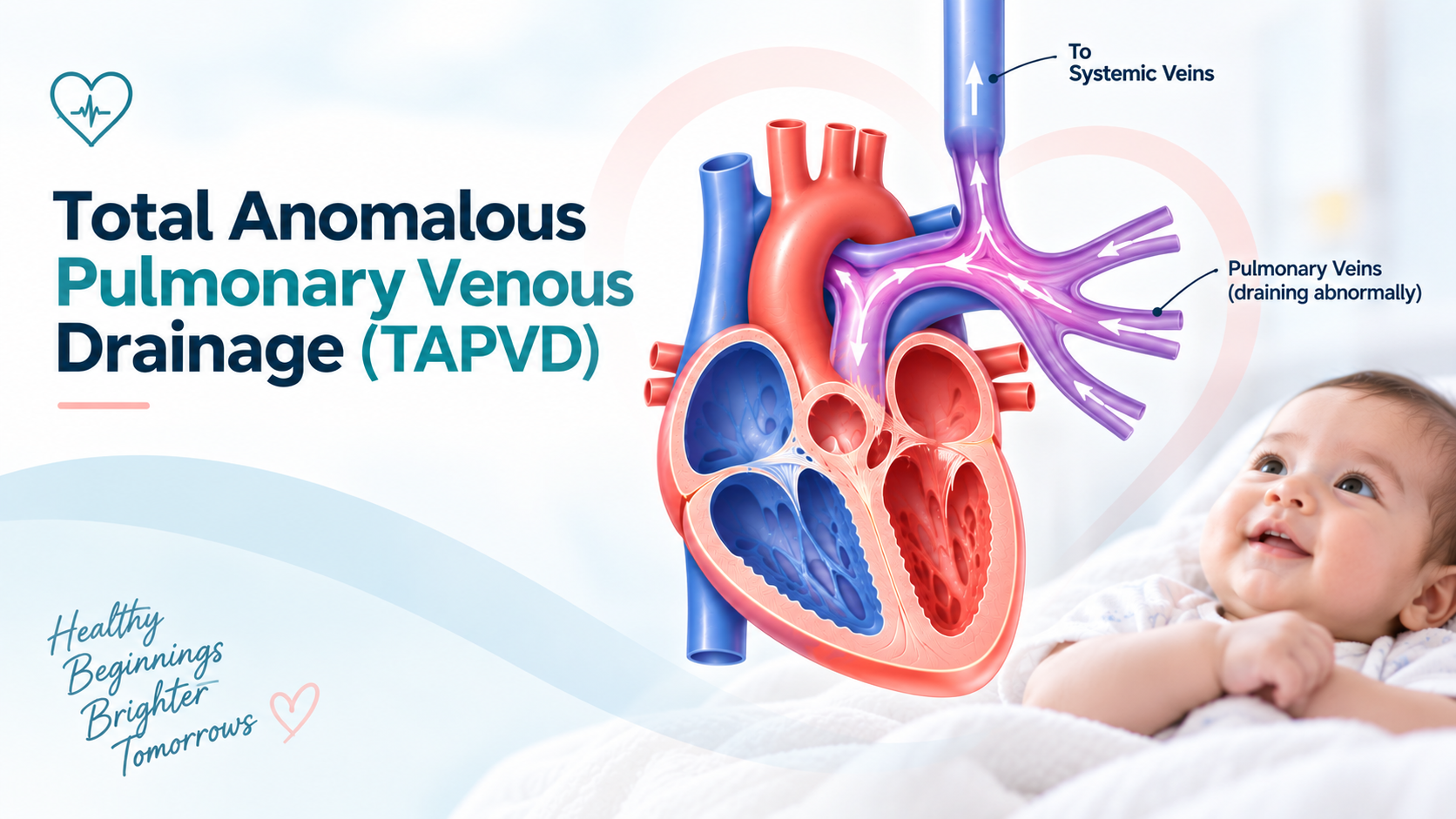
Total Anomalous Pulmonary Venous Drainage (TAPVD), also known as Total Anomalous Pulmonary Venous Return (TAPVR), is a rare congenital heart defect in which the pulmonary veins do not connect normally to the left atrium of the heart. Instead, oxygen-rich blood from the lungs returns to the right side of the heart through abnormal pathways, causing mixing of oxygenated and deoxygenated blood.
Early diagnosis and timely surgical correction are essential to ensure normal blood circulation and prevent life-threatening complications. Our specialized congenital heart surgery team provides advanced diagnosis, comprehensive treatment, and expert surgical care for newborns, infants, children, and adults with TAPVD.
What is TAPVD?
In a healthy heart, pulmonary veins carry oxygen-rich blood from the lungs directly to the left atrium. In TAPVD, all pulmonary veins connect abnormally to veins leading to the right atrium instead of the left atrium.
As a result:
- Oxygen-rich and oxygen-poor blood mix together.
- The heart works harder to pump blood.
- The body receives less oxygen than it needs.
- Serious complications can develop if left untreated.
TAPVD requires surgical correction and is considered a critical congenital heart defect.
Types of TAPVD
- Supracardiac TAPVD: The pulmonary veins drain into veins located above the heart, usually through the superior vena cava.
- Cardiac TAPVD: The pulmonary veins connect directly to the right atrium or coronary sinus.
- Infracardiac TAPVD: The pulmonary veins drain below the heart through veins passing through the diaphragm.
- Mixed TAPVD: Different pulmonary veins connect to multiple abnormal locations.
Symptoms of TAPVD
Symptoms often appear shortly after birth and may include:
- Rapid breathing
- Difficulty feeding
- Bluish discoloration of lips and skin (cyanosis)
- Poor weight gain
- Fatigue during feeding
- Sweating excessively
- Fast heart rate
- Respiratory distress
- Low oxygen levels
In obstructed TAPVD, symptoms may be severe and require emergency treatment.
Causes of TAPVD
The exact cause of TAPVD is not fully understood. It develops during fetal heart formation and is present at birth. Certain genetic and developmental factors may contribute to congenital heart defects, although most cases occur without a known cause.
Diagnosis of TAPVD
Accurate diagnosis is essential for planning treatment. Diagnostic evaluations may include:
- Pediatric Echocardiography
- Electrocardiogram (ECG)
- Chest X-ray
- Cardiac CT Scan
- Cardiac MRI
- Cardiac Catheterization
- Pulse Oximetry
Advanced imaging helps determine the type of TAPVD and whether pulmonary venous obstruction is present.
TAPVD Surgery
Surgery is the definitive treatment for TAPVD and is usually performed soon after diagnosis.
Surgical Goals
- Connect pulmonary veins to the left atrium
- Restore normal blood circulation
- Eliminate abnormal venous connections
- Relieve pulmonary venous obstruction
- Improve oxygen delivery throughout the body
The procedure is performed under cardiopulmonary bypass by an experienced congenital heart surgeon.
Recovery After TAPVD Repair
Most children recover well after successful surgery. Recovery typically involves:
- Intensive care monitoring
- Pain management
- Regular echocardiographic follow-up
- Nutritional support
- Gradual return to normal activity
Long-term outcomes are excellent when surgery is performed early and followed by regular cardiac evaluations.
Long-Term Outlook
With modern surgical techniques and specialized congenital heart care, most patients lead healthy and active lives after TAPVD repair. Regular follow-up with a congenital heart specialist helps monitor heart function and detect any potential complications.
Why Choose Our Congenital Heart Surgery Team?
- Expertise in neonatal and pediatric cardiac surgery
- Advanced treatment for complex congenital heart defects
- Comprehensive fetal-to-adult congenital heart care
- State-of-the-art cardiac imaging and diagnostics
- Multidisciplinary cardiac care team
- Personalized treatment plans for every patient
Our goal is to provide safe, effective, and compassionate care for children and adults living with congenital heart disease.