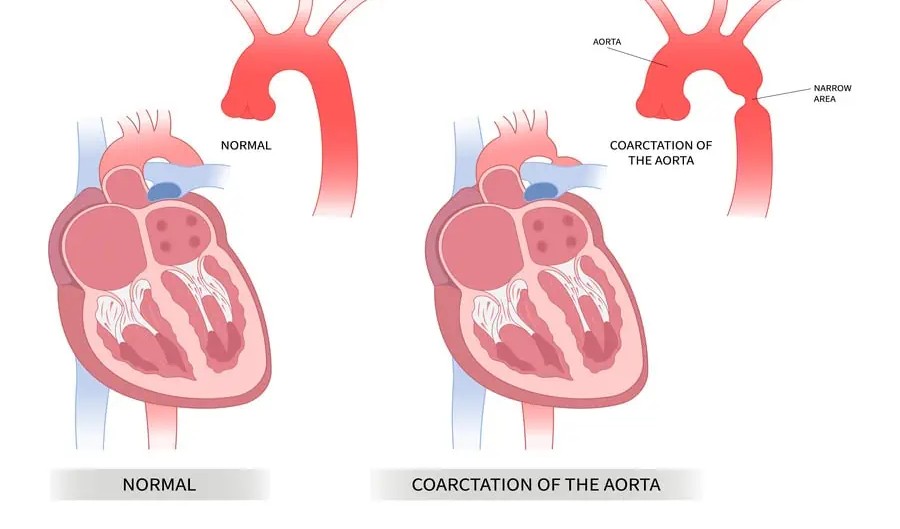
Coarctation of Aorta (CoA) Treatment by Pediatric Surgeon
Coarctation of the Aorta (CoA) is a congenital heart defect in which a portion of the aorta, the body’s main artery, becomes abnormally narrowed.
This narrowing restricts blood flow from the heart to the lower part of the body, forcing the heart to pump harder to circulate blood. Over time, this can lead to high blood pressure, heart enlargement, and serious cardiovascular complications.
Coarctation of the aorta can occur alone or along with other congenital heart defects such as:
- Bicuspid aortic valve
- Ventricular Septal Defect (VSD)
- Patent Ductus Arteriosus (PDA)
- Complex congenital heart disease
Early diagnosis and treatment by an experienced Pediatric Surgeon are essential for preventing long-term complications.
Causes of Coarctation of Aorta
CoA develops during fetal heart formation before birth. The exact cause is often unknown.
Risk Factors Include:
- Genetic abnormalities
- Family history of congenital heart disease
- Associated congenital heart defects
Symptoms of Coarctation of Aorta
Symptoms vary depending on the severity of the narrowing and the patient’s age.
Symptoms in Infants
Severe CoA in newborns may cause:
- Rapid breathing
- Poor feeding
- Excessive sweating
- Pale skin
- Weak pulses in the legs
- Cold feet
- Poor weight gain
- Heart failure symptoms
Severe narrowing in newborns can become a medical emergency.
Symptoms in Children and Adults
Milder CoA may remain undiagnosed until later in life.
Common Symptoms Include:
- Headaches
- Leg pain during exercise
- Fatigue
- Nosebleeds
- Chest pain
- Shortness of breath
- Weak lower body pulses
Some patients may be diagnosed during routine blood pressure evaluation.
Complications of Untreated CoA
Without treatment, CoA can lead to serious complications such as:
- Heart failure
- Stroke
- Aortic rupture
- Aortic aneurysm
- Coronary artery disease
- Kidney problems
Early intervention helps reduce long-term cardiovascular risks.
Diagnosis of Coarctation of Aorta
A specialized Pediatric Surgeon may recommend advanced imaging and cardiac evaluation.
Diagnostic Tests Include:
- Echocardiography (2D Echo)
- ECG
- Chest X-ray
- Blood pressure measurement in arms and legs
- Cardiac CT angiography
- Cardiac MRI
- Cardiac catheterization
These tests help determine the location and severity of the narrowing.
Treatment Options for Coarctation of Aorta
Treatment depends on the severity of the narrowing and the patient’s age.
1. Medications
Medications may help control blood pressure before or after intervention.
2. Balloon Angioplasty and Stenting
Some older children and adults may benefit from minimally invasive catheter-based treatment.
A balloon or stent is used to widen the narrowed aortic segment.
Coarctation of Aorta Repair Surgery
Severe narrowing often requires surgical repair.
Surgical Goals:
- Remove or bypass the narrowed segment
- Restore normal blood flow
- Reduce pressure on the heart
- Improve blood pressure control
Surgical techniques may include:
- End-to-end repair
- Patch aortoplasty
- Subclavian flap repair
- Aortic bypass grafting
The best surgical approach depends on the patient’s anatomy and age.
Pediatric CoA Surgery
Infants and children with severe CoA often require early surgical treatment.
Benefits of Early Repair:
- Improved heart function
- Better blood circulation
- Reduced risk of heart failure
- Improved growth and development
Pediatric congenital heart surgeons use advanced techniques for safe and effective repair.
Adult Congenital CoA Care
Adults with repaired or newly diagnosed CoA require specialized lifelong care.
Adult congenital heart specialists provide:
- Blood pressure management
- Aortic monitoring
- Stent procedures
- Long-term cardiovascular follow-up
- Exercise and lifestyle guidance
Recovery After CoA Repair
Recovery depends on the severity of the condition and treatment method.
Recovery Guidelines:
- Regular blood pressure monitoring
- Follow-up imaging studies
- Heart-healthy lifestyle
- Gradual return to activities
- Lifelong congenital heart follow-up
Most patients experience significant improvement after successful treatment.
Long-Term Outlook After CoA Treatment
Long-term outcomes are generally excellent with timely treatment.
Long-Term Follow-Up Includes:
- Monitoring for recurrent narrowing
- Blood pressure control
- Aortic health evaluation
- Heart function monitoring
Regular follow-up helps detect complications early and maintain long-term heart health.