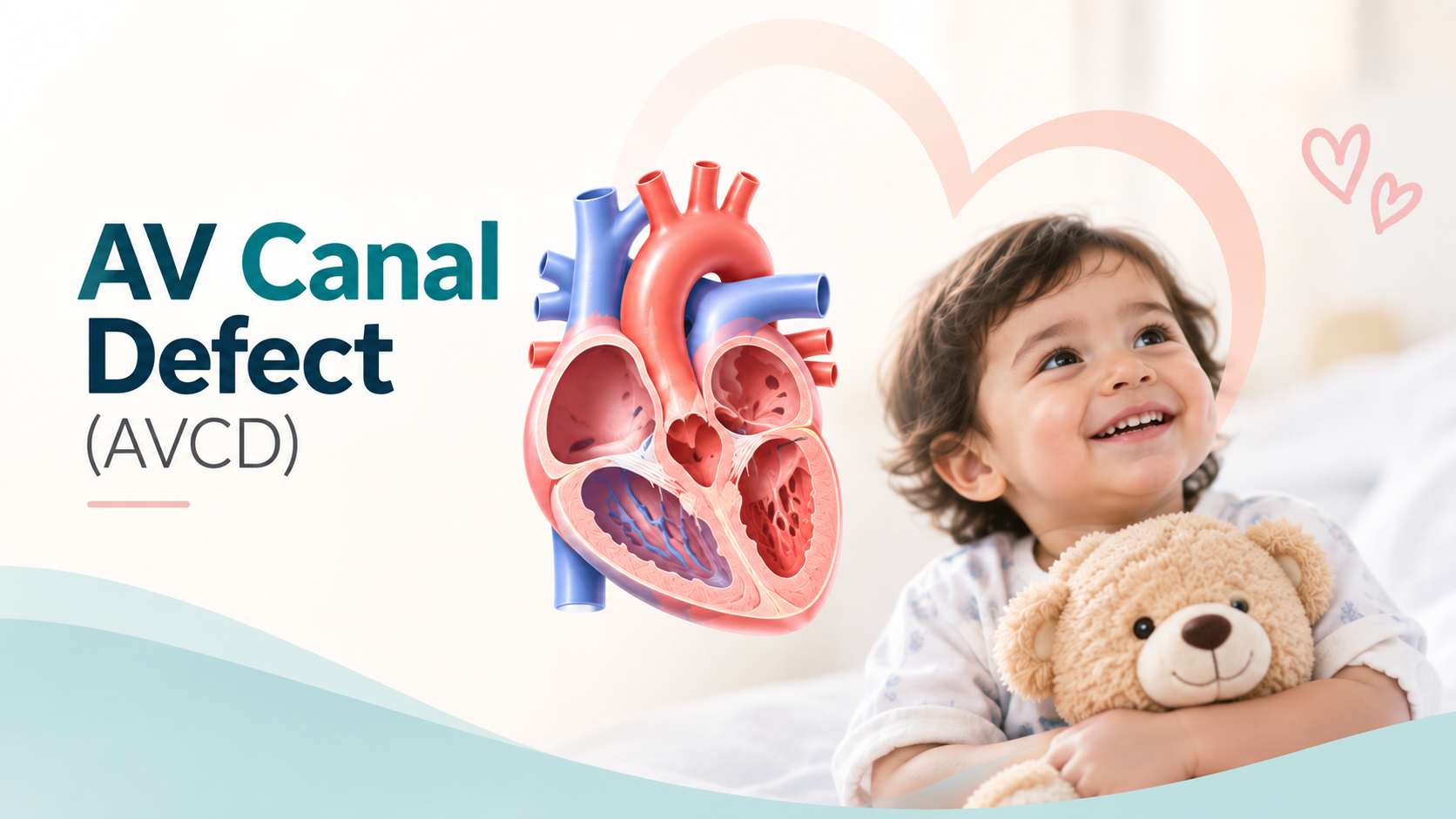
AV Canal Defect (AVCD) Treatment by Pediatric & Adult Congenital Heart Surgeon
An Atrioventricular Canal Defect (AV Canal Defect or AVCD) is a complex congenital heart defect that affects the center of the heart. It involves holes between the heart chambers and abnormalities of the heart valves.
In AVCD, the walls separating the upper chambers (atria) and lower chambers (ventricles) do not develop properly. The mitral and tricuspid valves may also form as a single abnormal valve instead of two separate valves.
This condition causes oxygen-rich and oxygen-poor blood to mix, forcing the heart and lungs to work harder.
AV Canal Defect is commonly seen in infants and is often associated with Down syndrome and other congenital conditions.
AV Canal defect is often associated with heart rhythm abnormalities.
Types of AV Canal Defect
- Complete AV Canal Defect
Canal defect associated with other abnormalities inside heart like unequal size of ventricles, pulmonary stenosis, abnormal great arteries, others. - Partial AV Canal Defect
There is usually a hole between the upper chambers (ASD) and abnormalities in one of the heart valves. - Transitional AV Canal Defect
A combination of features from complete and partial AVCD.
Causes of AV Canal Defect
AVCD develops during fetal heart formation before birth. The exact cause is often unknown, but certain factors may increase the risk.
Risk Factors Include:
- Genetic abnormalities
- Down syndrome
- Family history of congenital heart disease
- Maternal diabetes
- Viral infections during pregnancy
- Smoking or alcohol use during pregnancy
Symptoms of AV Canal Defect
Symptoms often appear during infancy, especially in complete AV canal defects.
Common Symptoms in Babies and Children
- Rapid breathing
- Difficulty feeding
- Poor weight gain
- Excessive sweating
- Fatigue
- Frequent lung infections
- Bluish skin discoloration (cyanosis)
Symptoms in Adults
- Shortness of breath
- Fatigue
- Heart rhythm problems
- Swelling in legs
- Reduced exercise tolerance
Complications of Untreated AVCD
Without timely treatment, AV Canal Defect can lead to serious complications, including:
- Pulmonary hypertension
- Congestive heart failure
- Valve leakage
- Arrhythmias
- Lung damage
- Growth and developmental delays
Early diagnosis and expert treatment are essential for better long-term outcomes.
Diagnosis of AV Canal Defect
A specialized Pediatric & Adult Congenital Heart Surgeon may recommend advanced diagnostic tests to evaluate the defect.
Diagnostic Tests Include:
- Echocardiography (2D Echo)
- ECG
- Chest X-ray
- Cardiac CT or MRI
- Cardiac catheterization
These tests help determine the severity of the condition and guide treatment planning.
Treatment Options for AV Canal Defect
Treatment usually requires surgery, especially for complete AV canal defects.
- Medications
Medications may help control symptoms before surgery by reducing fluid buildup and improving heart function. - AV Canal Defect Repair Surgery
Open-heart surgery is the primary treatment for AVCD and is usually performed during infancy.
Surgical Goals:- Close the holes in the heart chambers
- Separate the abnormal common valve into two functional valves
- Improve blood flow and heart function
Advanced congenital heart surgery techniques help achieve safe and effective outcomes.
Pediatric AV Canal Defect Surgery
Children with AVCD often require early surgery to prevent permanent lung and heart damage.
Benefits of Early Surgical Repair:
- Improved growth and development
- Better heart function
- Reduced risk of complications
- Enhanced quality of life
Pediatric congenital heart surgeons use specialized techniques designed for newborns, infants, and children.
Adult Congenital AV Canal Defect Care
Some adults may have residual valve problems or unrepaired congenital defects diagnosed later in life.
Adult congenital heart specialists provide:
- Long-term follow-up care
- Valve repair or replacement
- Arrhythmia management
- Advanced imaging and monitoring
Recovery After AV Canal Defect Surgery
Recovery depends on the severity of the defect and the patient's overall health.
Post-Surgery Recovery Tips
- Attend regular cardiac follow-up visits
- Take medications as prescribed
- Maintain proper nutrition
- Gradually resume activities
- Monitor for breathing difficulties or fatigue
Most children recover well and can lead active, healthy lives after successful repair.