Double Outlet Right Ventricle (DORV) Treatment by Pediatric & Adult Congenital Heart Surgeon
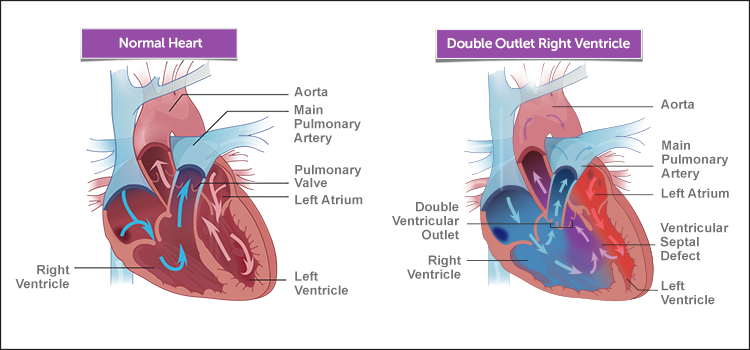
Double Outlet Right Ventricle (DORV) is a rare and complex congenital heart defect in which both the aorta and the pulmonary artery arise mainly from the right ventricle instead of being connected to separate ventricles.
Normally:
- The aorta carries oxygen-rich blood from the left ventricle to the body.
- The pulmonary artery carries oxygen-poor blood from the right ventricle to the lungs.
In DORV, the abnormal arrangement disrupts normal blood circulation, causing oxygen-poor and oxygen-rich blood to mix. Most patients with DORV also have a Ventricular Septal Defect (VSD), which allows blood to pass between the ventricles.
DORV requires specialized evaluation and surgical treatment by an experienced Pediatric & Adult Congenital Heart Surgeon.
Types of Double Outlet Right Ventricle
DORV is classified based on the location of the VSD and the relationship of the major arteries.
- Subaortic VSD Type
The VSD is located near the aorta. - Subpulmonary VSD Type (Taussig-Bing Anomaly)
The VSD is positioned near the pulmonary artery. - Doubly Committed VSD
The VSD is connected to both great arteries. - Non-Committed VSD
The VSD is located farther from both arteries.
Each type affects blood flow differently and influences the surgical approach.
Causes of DORV
DORV develops during fetal heart formation before birth. The exact cause is often unknown.
Risk Factors Include:
- Genetic abnormalities
- Chromosomal disorders
- Family history of congenital heart disease
- Maternal diabetes
- Maternal infections during pregnancy
Symptoms of DORV
Symptoms usually appear shortly after birth or during infancy.
Common Symptoms in Infants and Children
- Bluish discoloration of lips and skin (cyanosis)
- Rapid breathing
- Difficulty feeding
- Poor weight gain
- Fatigue
- Excessive sweating
- Fast heartbeat
Symptoms in Adults
Adults with repaired or unrepaired DORV may experience:
- Shortness of breath
- Arrhythmias
- Fatigue
- Reduced exercise tolerance
- Heart failure symptoms
Complications of Untreated DORV
Without proper treatment, DORV can lead to severe complications such as:
- Pulmonary hypertension
- Congestive heart failure
- Severe cyanosis
- Growth and developmental delays
- Arrhythmias
- Reduced oxygen supply to the body
Early diagnosis and timely surgical intervention are critical for long-term survival and heart function.
Diagnosis of Double Outlet Right Ventricle
A specialized Pediatric & Adult Congenital Heart Surgeon may recommend advanced imaging and cardiac evaluation.
Diagnostic Tests Include:
- Echocardiography (2D Echo)
- ECG
- Chest X-ray
- Cardiac CT scan
- Cardiac MRI
- Cardiac catheterization
These tests help determine the heart anatomy and guide surgical planning.
Treatment Options for DORV
- Medical Management
Medications may temporarily help manage symptoms before surgery.
These may include:- Diuretics
- Oxygen therapy
- Medications to support heart function
- DORV Corrective Surgery
Surgery is the primary treatment for Double Outlet Right Ventricle.
Surgical Goals:- Redirect oxygen-rich blood to the aorta
- Improve blood flow to the lungs
- Close the ventricular septal defect (VSD)
- Restore near-normal heart circulation
Pediatric DORV Surgery
Most children with DORV require surgery during infancy or early childhood.
Benefits of Early Surgical Treatment:
- Improved oxygen levels
- Better growth and development
- Reduced risk of pulmonary hypertension
- Improved heart function and survival
Pediatric congenital heart surgeons use advanced techniques for complex neonatal and infant heart repair.
Adult Congenital DORV Care
Some adults may require lifelong monitoring after childhood surgery or may present with residual congenital heart problems.
Adult congenital heart specialists provide:
- Long-term cardiac follow-up
- Arrhythmia management
- Valve evaluation
- Re-intervention when needed
- Advanced imaging and monitoring
Recovery After DORV Surgery
Recovery varies depending on the complexity of the condition and surgical procedure.
Recovery Guidelines:
- Regular follow-up with congenital heart specialists
- Gradual return to physical activities
- Heart-healthy lifestyle
- Monitoring for arrhythmias or valve problems
Many children grow up to lead active and productive lives after successful repair.