Rastelli Operation / Double Switch Operation by Pediatric & Adult Congenital Heart Surgeon
The Rastelli Operation is a complex congenital heart surgery performed to correct certain congenital heart defects involving abnormal blood flow between the heart chambers and major arteries.
This procedure is commonly used in children with conditions such as:
- Transposition of the Great Arteries (TGA)
- Double Outlet Right Ventricle (DORV)
- Ventricular Septal Defect (VSD)
- Pulmonary stenosis or pulmonary atresia
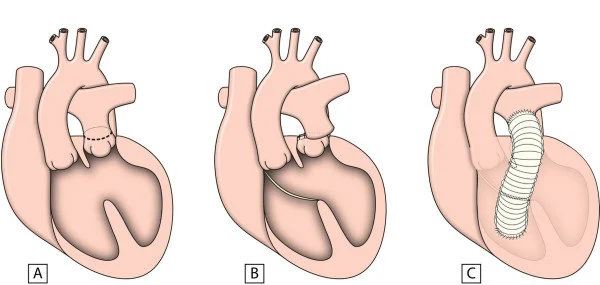
During the Rastelli operation, the surgeon creates a pathway inside the heart to direct oxygen-rich blood to the aorta and places a conduit between the right ventricle and pulmonary artery to restore blood flow to the lungs.
The goal is to improve oxygen circulation and normalize heart function.
What is the Double Switch Operation?
The Double Switch Operation is an advanced congenital heart surgery performed mainly for patients with:
- Congenitally Corrected Transposition of the Great Arteries (ccTGA)
- Complex congenital heart defects affecting heart circulation
In ccTGA, the heart’s chambers and arteries are connected abnormally, causing the right ventricle to pump blood to the body instead of the left ventricle.
The double switch procedure corrects the circulation by combining:
- An atrial switch procedure
- An arterial switch or Rastelli-type repair
This surgery helps restore the left ventricle as the main pumping chamber for the body.
Conditions That May Require Rastelli or Double Switch Surgery
A specialized Pediatric & Adult Congenital Heart Surgeon may recommend these procedures for patients with:
- Transposition of the Great Arteries (TGA)
- Congenitally Corrected TGA (ccTGA)
- Double Outlet Right Ventricle (DORV)
- Ventricular Septal Defect (VSD)
- Pulmonary stenosis
- Pulmonary atresia
- Complex congenital heart disease
Symptoms of Complex Congenital Heart Defects
Children with these conditions may experience:
- Bluish skin or lips (cyanosis)
- Rapid breathing
- Fatigue
- Poor feeding
- Poor weight gain
- Low oxygen levels
- Heart murmur
- Reduced exercise tolerance
Adults with unrepaired or previously repaired congenital heart disease may also develop:
- Arrhythmias
- Heart failure symptoms
- Shortness of breath
- Exercise intolerance
Diagnosis Before Surgery
Advanced cardiac imaging and evaluation are essential before performing these complex surgeries.
Diagnostic Tests Include:
- Echocardiography (2D Echo)
- ECG
- Chest X-ray
- Cardiac CT scan
- Cardiac MRI
- Cardiac catheterization
- Pulse oximetry
These tests help determine heart anatomy, blood flow patterns, and the best surgical approach.
How is the Rastelli Operation Performed?
During the Rastelli Procedure:
- The ventricular septal defect (VSD) is used to direct oxygen-rich blood from the left ventricle to the aorta
- A conduit is placed between the right ventricle and pulmonary artery
- Blood flow to the lungs is restored
This helps separate oxygen-rich and oxygen-poor blood circulation.
How is the Double Switch Operation Performed?
During the Double Switch Procedure:
- The atrial blood flow is redirected
- The major arteries are repositioned or rerouted
- The left ventricle becomes the systemic pumping chamber
This restores more normal heart circulation and reduces long-term strain on the right ventricle.
Benefits of Rastelli and Double Switch Surgery
Advantages Include:
- Improved oxygen levels
- Better heart function
- Improved growth and development
- Reduced cyanosis
- Better long-term circulation
- Improved quality of life
Early surgical intervention significantly improves long-term outcomes.
Risks and Complications
These are highly specialized surgeries and may involve certain risks.
Possible Risks Include:
- Bleeding
- Infection
- Arrhythmias
- Conduit narrowing or blockage
- Valve problems
- Need for future reoperations
- Heart rhythm disturbances
Close follow-up with congenital heart specialists is important after surgery.
Recovery After Surgery
Recovery depends on the complexity of the heart defect and overall patient condition.
Recovery Guidelines:
- Monitoring in pediatric cardiac ICU
- Regular echocardiograms
- Heart rhythm monitoring
- Gradual return to activities
- Lifelong congenital heart follow-up
Many children and adults experience significant improvement in heart function and oxygen levels after surgery.
Long-Term Care After Rastelli or Double Switch Operation
Patients require ongoing congenital heart care throughout life.
Long-Term Follow-Up Includes:
- Monitoring heart function
- Conduit and valve evaluation
- Arrhythmia management
- Exercise guidance
- Repeat interventions if needed
Adult congenital heart specialists play an important role in long-term management.