Aortopulmonary Window (APW) Treatment by Pediatric & Adult Congenital Heart Surgeon
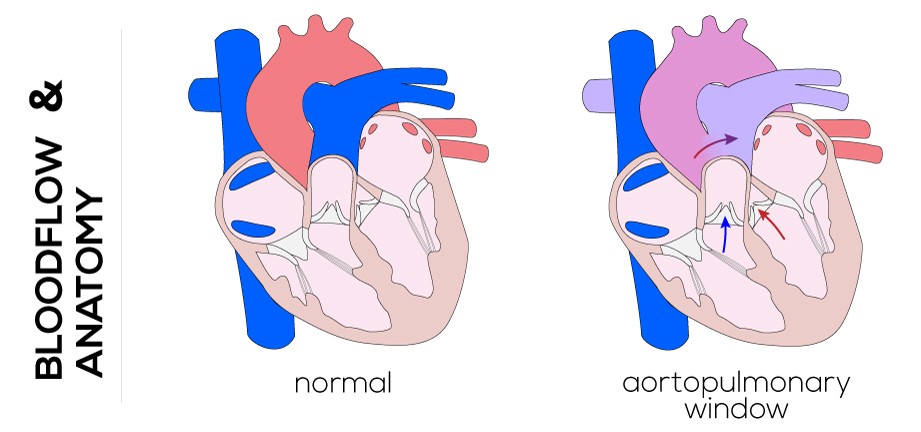
An Aortopulmonary Window (APW) is a rare congenital heart defect in which there is an abnormal opening between the aorta and the pulmonary artery.
Normally, these two major blood vessels are completely separate. In APW, the abnormal connection allows oxygen-rich blood from the aorta to flow into the pulmonary artery, causing excessive blood flow to the lungs and increased strain on the heart.
Aortopulmonary Window is usually diagnosed in infancy and often requires early surgical correction to prevent serious complications.
Types of Aortopulmonary Window
APW is classified based on the location and size of the opening.
- Proximal APW
The opening is located near the heart valves. - Distal APW
The defect is located farther from the valves near the pulmonary artery branches. - Total APW
A large defect involving most of the wall between the aorta and pulmonary artery. - Complex AP Window
AP Window may be associated with other abnormalities of the heart & vessels like coronary artery anomalies, interrupted aortic arch, truncus arteriosus, others.
Causes of Aortopulmonary Window
APW develops during fetal heart formation before birth. The exact cause is often unknown.
Possible Risk Factors Include:
- Genetic abnormalities
- Family history of congenital heart disease
- Maternal infections during pregnancy
Symptoms of Aortopulmonary Window
Symptoms usually appear early in infancy because of excessive blood flow to the lungs.
Common Symptoms in Infants and Children
- Rapid breathing
- Difficulty feeding
- Poor weight gain
- Excessive sweating
- Frequent lung infections
- Fatigue
- Fast heartbeat
Symptoms in Adults
Rarely, untreated APW may persist into adulthood and cause:
- Shortness of breath
- Pulmonary hypertension
- Fatigue
- Heart failure symptoms
Complications of Untreated APW
Without timely treatment, APW can lead to severe complications, including:
- Pulmonary hypertension
- Congestive heart failure
- Irreversible lung damage
- Growth failure in infants
- Arrhythmias
- Eisenmenger syndrome
Early diagnosis and surgical correction are essential for preventing permanent heart and lung damage.
Diagnosis of Aortopulmonary Window
A specialized Pediatric & Adult Congenital Heart Surgeon may use advanced diagnostic tests to confirm APW and evaluate the severity of the condition.
Diagnostic Tests Include:
- Echocardiography (2D Echo)
- ECG
- Chest X-ray
- Cardiac CT scan
- Cardiac MRI
- Cardiac catheterization
These tests help determine the size and location of the defect and assist in surgical planning.
Treatment Options for APW
- Medical Management
Medications may temporarily help control heart failure symptoms before surgery.
These may include:- Diuretics
- Heart support medications
- Nutritional support for infants
- APW Repair Surgery
Surgery is the definitive treatment for Aortopulmonary Window and is usually performed during infancy.
Surgical Goals:- Close the abnormal opening
- Restore normal blood circulation
- Prevent lung damage and heart failure
Pediatric APW Surgery
Early surgical correction provides the best outcomes for infants and children with APW.
Benefits of Early Surgery:
- Improved heart and lung function
- Better growth and development
- Reduced risk of pulmonary hypertension
- Improved long-term survival
Pediatric congenital heart surgeons use advanced techniques to safely repair complex congenital defects in newborns and infants.
Adult Congenital APW Care
Although rare, some adults may present with untreated or residual APW.
Adult congenital heart specialists provide:
- Advanced diagnostic evaluation
- Pulmonary hypertension management
- Corrective heart surgery
- Long-term congenital heart follow-up
Recovery After APW Surgery
Most children recover well after successful APW repair.
Recovery Guidelines:
- Regular follow-up with a congenital heart specialist
- Proper nutrition and hydration
- Gradual return to normal activities
- Monitoring heart and lung function
Long-term outcomes are generally excellent when surgery is performed early.