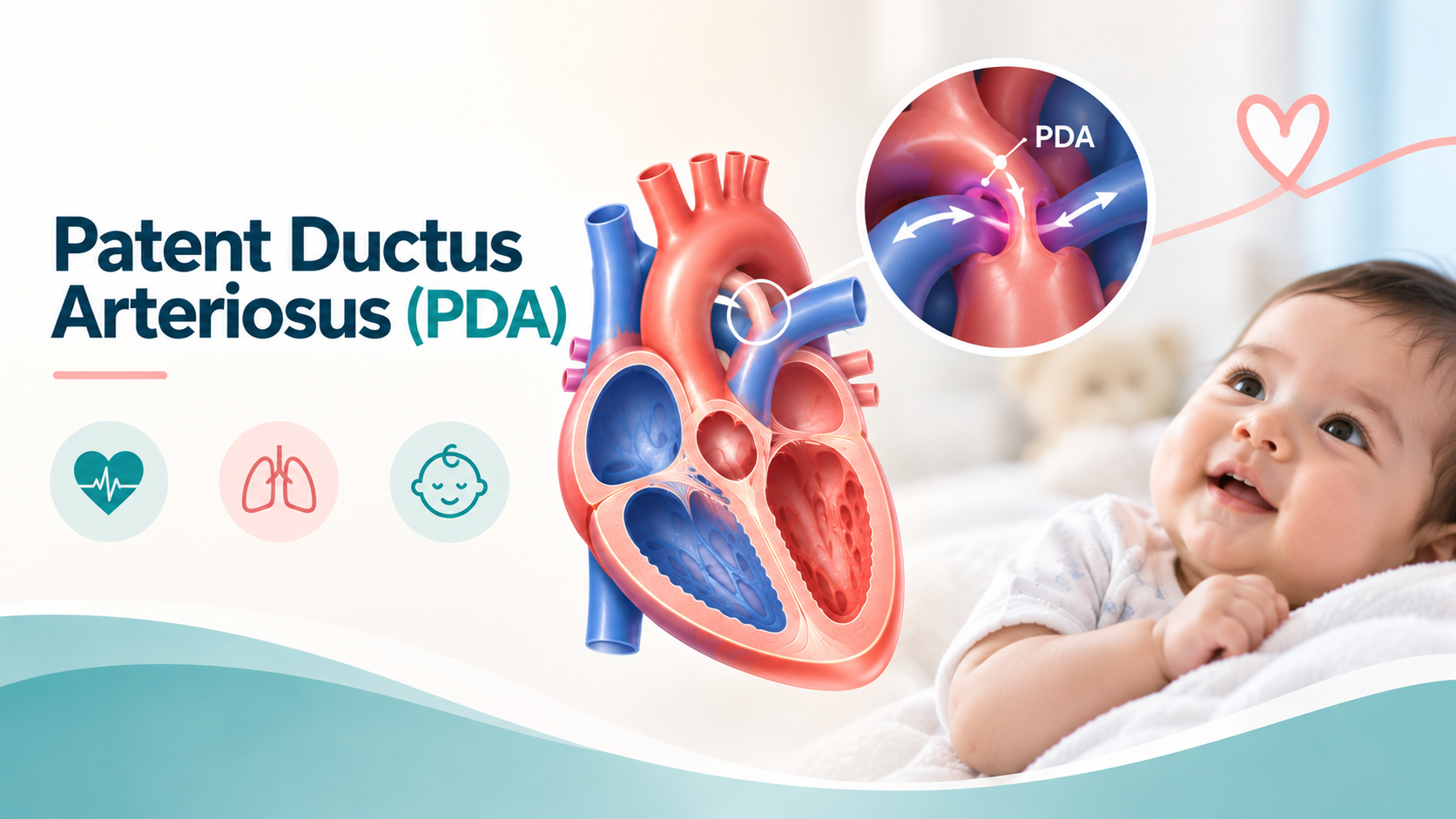
Patent Ductus Arteriosus (PDA) Treatment by Pediatric & Adult Congenital Heart Surgeon
Patent Ductus Arteriosus (PDA) is a congenital heart defect in which a temporary blood vessel called the ductus arteriosus fails to close after birth.
Before birth, this vessel helps blood bypass the baby’s lungs because oxygen is received through the placenta. Normally, the ductus arteriosus closes shortly after birth. When it remains open, it is known as Patent Ductus Arteriosus.
An open PDA allows abnormal blood flow between the aorta and pulmonary artery, causing extra strain on the heart and lungs.
PDA is commonly seen in premature babies but can also occur in full-term infants, children, and adults.
Causes of Patent Ductus Arteriosus
The exact cause of PDA is not always known, but several factors may increase the risk.
Risk Factors Include:
- Premature birth
- Low birth weight
- Family history of congenital heart disease
- Maternal infections during pregnancy
- Genetic conditions
Symptoms of PDA
Symptoms depend on the size of the PDA and the amount of abnormal blood flow.
Symptoms in Infants and Children
- Rapid breathing
- Difficulty feeding
- Poor weight gain
- Sweating during feeding
- Frequent respiratory infections
- Fatigue
Symptoms in Adults
Small PDAs may remain unnoticed for years, while larger PDAs can cause:
- Shortness of breath
- Fatigue
- Heart palpitations
- Reduced exercise tolerance
- Heart murmur
Complications of Untreated PDA
If left untreated, a moderate or large PDA can lead to serious complications such as:
- Pulmonary hypertension
- Heart enlargement
- Heart failure
- Irregular heartbeat
- Increased risk of heart infection (endocarditis)
Early diagnosis - long-term heart & lung damage and timely treatment are important for preventing long-term heart damage.
Diagnosis of Patent Ductus Arteriosus
A specialized Pediatric & Adult Congenital Heart Surgeon may use advanced diagnostic tests to confirm PDA and evaluate its severity.
Diagnostic Tests Include:
- Echocardiography (2D Echo)
- ECG
- Chest X-ray
- Cardiac CT or MRI
- Cardiac catheterization
These tests help determine the size of the PDA and guide the most effective treatment plan.
Treatment Options for PDA
Treatment depends on the size of the PDA, symptoms, and the patient’s age.
- Observation
Small PDAs without symptoms may only require regular monitoring. - Medications
In premature infants, medications may help close the ductus arteriosus naturally. - Catheter-Based PDA Device Closure
Most PDAs can be treated using minimally invasive catheter-based procedures. - PDA Surgery
Requires surgical closure from left side of chest performed.
Pediatric PDA Treatment
Early treatment in infants and children helps prevent lung damage and supports healthy growth and development.
Pediatric congenital heart specialists provide:
- Advanced neonatal cardiac care
- Minimally invasive procedures
- Pediatric heart surgery
- Long-term congenital heart follow-up
Adult Congenital PDA Care
Some adults may be diagnosed with PDA later in life during evaluation for heart murmurs or breathing difficulties.
Adult congenital heart specialists offer:
- Comprehensive evaluation
- Catheter-based PDA closure
- Surgical correction when needed
- Lifelong cardiac monitoring
Treatment in adults can improve heart function and overall quality of life.
Recovery After PDA Closure
Most patients recover quickly after PDA treatment.
Recovery Guidelines:
- Follow prescribed medications
- Attend follow-up appointments
- Maintain heart-healthy habits
- Resume activities gradually as advised by your doctor
Children usually recover rapidly and return to normal activities within a short period.