Atrial Septal Defect (ASD) Treatment by Pediatric & Adult Congenital Heart Surgeon
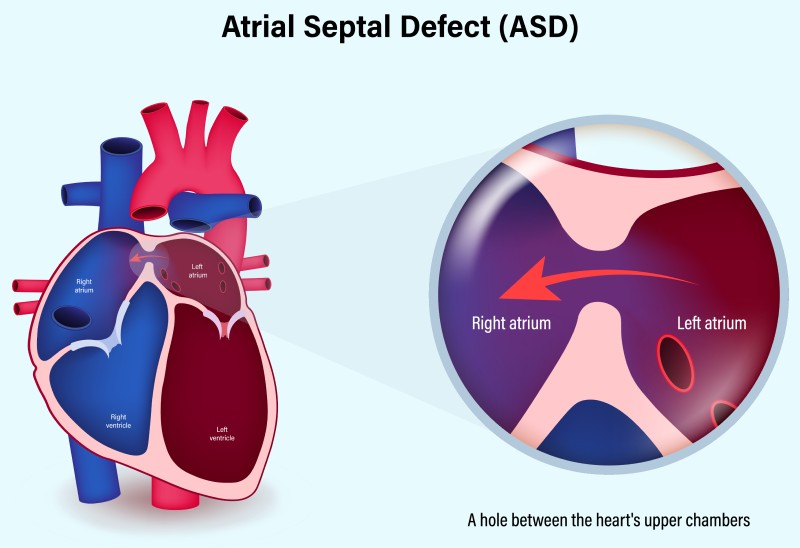
An Atrial Septal Defect (ASD) is a congenital heart defect in which there is a hole in the wall (septum) that separates the two upper chambers of the heart, known as the atria. This opening allows oxygen-rich blood and oxygen-poor blood to mix, increasing the workload on the heart and lungs.
ASD can affect both children and adults. While some small defects may close naturally during childhood, larger defects often require specialized evaluation and treatment by an experienced Pediatric & Adult Congenital Heart Surgeon.
Types of Atrial Septal Defects
There are several types of ASD, including:
- Secundum ASD - The most common type, located in the middle part of the atrial septum.
- Primum ASD - Found in the lower part of the septum and often associated with valve abnormalities.
- Sinus Venosus ASD - Located near the veins that return blood from the lungs.
- Coronary Sinus ASD - A rare form involving the coronary sinus region.
Causes of ASD
ASD is usually present at birth and develops during fetal heart formation. The exact cause is often unknown, but certain factors may increase the risk:
- Genetic conditions
- Family history of congenital heart disease
- Maternal infections during pregnancy
- Smoking or alcohol use during pregnancy
Symptoms of Atrial Septal Defect
Small ASDs may not cause noticeable symptoms for years. Larger defects can lead to symptoms in childhood or adulthood.
Symptoms in Children:
- Poor weight gain
- Frequent respiratory infections
- Fatigue during feeding or playing
- Shortness of breath
- Heart murmur
Symptoms in Adults:
- Breathlessness during activity
- Fatigue
- Irregular heartbeat (arrhythmia)
- Swelling in legs
- Chest discomfort
- Reduced exercise tolerance
When Should You See a Congenital Heart Specialist?
Early diagnosis and timely treatment are important to prevent complications such as:
- Pulmonary hypertension
- Heart failure
- Stroke
- Atrial fibrillation
- Enlargement of the heart chambers
Consult a specialized Pediatric & Adult Congenital Heart Surgeon if you or your child experience symptoms suggestive of congenital heart disease.
Diagnosis of ASD
A congenital heart specialist may recommend the following tests:
- Echocardiography (2D Echo)
- ECG
- Chest X-ray
- Cardiac CT or MRI
- Cardiac catheterization
These tests help determine the size, location, and severity of the defect.
ASD Treatment Options
Treatment depends on the size of the defect, symptoms, and overall heart function.
- Observation
Small ASDs without symptoms may only require regular follow-up. - Medications
Medicines may help control symptoms like irregular heartbeat or fluid retention. - Device Closure (Non-Surgical ASD Closure)
Many secundum ASDs can be closed using a minimally invasive catheter-based procedure.
Benefits include:- No large incision
- Faster recovery
- Short hospital stay
- Minimal pain
- ASD Closure Surgery
Large or complex ASDs may require open-heart surgery performed by an experienced congenital heart surgeon.
Surgical repair may involve:- Direct closure with stitches
- Patch repair using special surgical material
Pediatric ASD Surgery
Children with significant ASD may need early intervention to support healthy growth and prevent long-term heart damage. Pediatric congenital heart surgery is performed using advanced techniques focused on safety, precision, and faster recovery.
Adult Congenital ASD Treatment
Some patients are diagnosed with ASD later in adulthood. Adult congenital heart specialists provide comprehensive treatment for adults with unrepaired or previously treated congenital heart defects.
Adult ASD treatment can improve:
- Heart function
- Breathing capacity
- Exercise tolerance
- Quality of life
Recovery After ASD Closure
Most patients recover well after ASD treatment.
Recovery Tips
- Follow medication instructions
- Attend regular follow-up visits
- Maintain heart-healthy nutrition
- Avoid smoking
- Resume activities gradually
Children usually return to normal activities quickly after successful treatment.