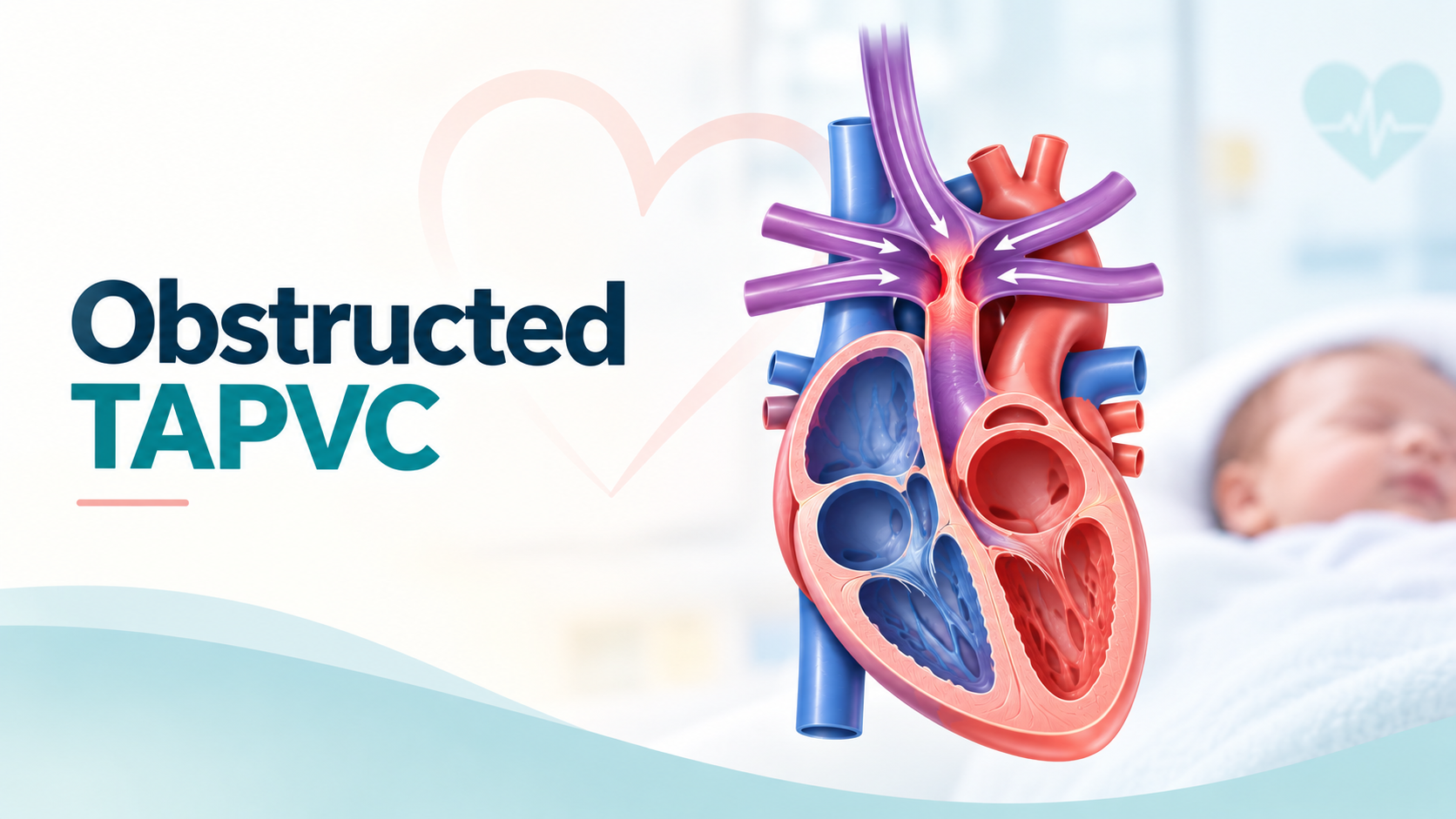
Obstructed TAPVC Treatment by Pediatric
Obstructed Total Anomalous Pulmonary Venous Connection (Obstructed TAPVC) is a rare and life-threatening congenital heart defect in which the pulmonary veins do not connect normally to the left atrium of the heart.
Instead, the pulmonary veins connect abnormally to other veins or chambers of the heart. In the obstructed form of TAPVC, blood flow from the lungs back to the heart becomes partially or completely blocked, leading to severe breathing difficulty and dangerously low oxygen levels.
Obstructed TAPVC is a surgical emergency that requires immediate diagnosis and specialized treatment by an experienced Pediatric Surgeon.
What Happens in Obstructed TAPVC?
- Normally:
Pulmonary veins connect incorrectly outside the left atrium & enter the right atrium via various pathways. - In TAPVC:
Pulmonary veins connect incorrectly outside the left atrium. - In Obstructed TAPVC:
- The abnormal venous pathway becomes narrowed or blocked.
- Blood cannot flow properly from the lungs.
- Pressure builds up in the lungs, causing severe respiratory distress and low oxygen levels.
Types of TAPVC
TAPVC is classified based on where the pulmonary veins connect abnormally.
- Supracardiac TAPVC
Pulmonary veins are connected to innominate vein or Superior Vena Cava. - Cardiac TAPVC
Pulmonary veins drain directly into right side of heart. - Infracardiac TAPVC
Pulmonary veins traverse into abdomen & indirectly drain into inferior vena cava. - Mixed TAPVC
Different pulmonary veins drain into different abnormal locations.
Causes of Obstructed TAPVC
Obstructed TAPVC develops during fetal heart formation before birth. The exact cause is often unknown.
Possible Risk Factors Include:
- Genetic abnormalities
- Family history of congenital heart disease
- Chromosomal disorders
- Poor fetal heart development
Symptoms of Obstructed TAPVC
Symptoms usually appear immediately after birth and progress rapidly.
Common Symptoms Include:
- Severe bluish discoloration (cyanosis)
- Rapid breathing
- Severe respiratory distress
- Poor feeding
- Low oxygen levels
- Fatigue
- Lethargy
- Cold extremities
- Shock in severe cases
Newborns with obstructed TAPVC often require emergency medical and surgical care.
Why Obstructed TAPVC is Dangerous
Obstruction severely limits blood return from the lungs, causing:
- High pressure in the lungs
- Severe oxygen deficiency
- Heart failure
- Life-threatening respiratory distress
Without urgent surgical treatment, obstructed TAPVC can rapidly become fatal.
Diagnosis of Obstructed TAPVC
A specialized Pediatric Echocardiography uses advanced imaging to diagnose the condition quickly.
Diagnostic Tests Include:
- Echocardiography (2D Echo)
- ECG
- Chest X-ray
- Pulse oximetry
- Cardiac CT scan to know status of course & size of individual pulmonary veins
Rapid diagnosis is critical for lifesaving treatment.
Emergency Treatment Before Surgery
Before definitive surgery, intensive medical support may be required.
Supportive Care May Include:
- Oxygen therapy
- Mechanical ventilation
- Medications to support blood pressure
- Intensive neonatal cardiac care
These treatments help stabilize the baby before surgery.
Obstructed TAPVC Repair Surgery
Emergency open-heart surgery is the definitive treatment for obstructed TAPVC.
Surgical Goals:
- Connect the pulmonary veins to the left atrium
- Remove the obstruction
- Restore normal blood flow from the lungs
- Close associated heart defects if present
The surgery is performed by a specialized congenital heart surgeon under cardiopulmonary bypass.
Pediatric TAPVC Surgery
Most obstructed TAPVC surgeries are performed during the newborn period or early infancy.
Benefits of Early Surgery:
- Improved oxygen levels
- Relief of lung pressure
- Better heart and lung function
- Improved survival and growth
Advanced pediatric cardiac surgery and neonatal intensive care have significantly improved outcomes.
Risks and Complications
Obstructed TAPVC is a critical condition, and surgery may involve certain risks.
Possible Risks Include:
- Bleeding
- Infection
- Pulmonary hypertension
- Arrhythmias
- Residual pulmonary vein narrowing
- Breathing complications
Careful postoperative monitoring is essential for recovery.
Recovery After TAPVC Surgery
Recovery depends on the severity of the obstruction and overall heart function.
Recovery Guidelines:
- Monitoring in pediatric cardiac ICU
- Regular echocardiograms
- Oxygen monitoring
- Nutritional support
- Long-term congenital heart follow-up
Many children recover well and show significant improvement after successful surgery.
Long-Term Outlook After TAPVC Repair
Long-term outcomes are generally good when surgery is performed early.
Long-Term Follow-Up Includes:
- Monitoring pulmonary vein function
- Heart rhythm evaluation
- Growth and developmental monitoring
- Lifelong congenital heart care in some patients
Regular follow-up with congenital heart specialists remains important.