Pulmonary Artery Banding (PA Band Surgery) by Pediatric & Adult Congenital Heart Surgeon
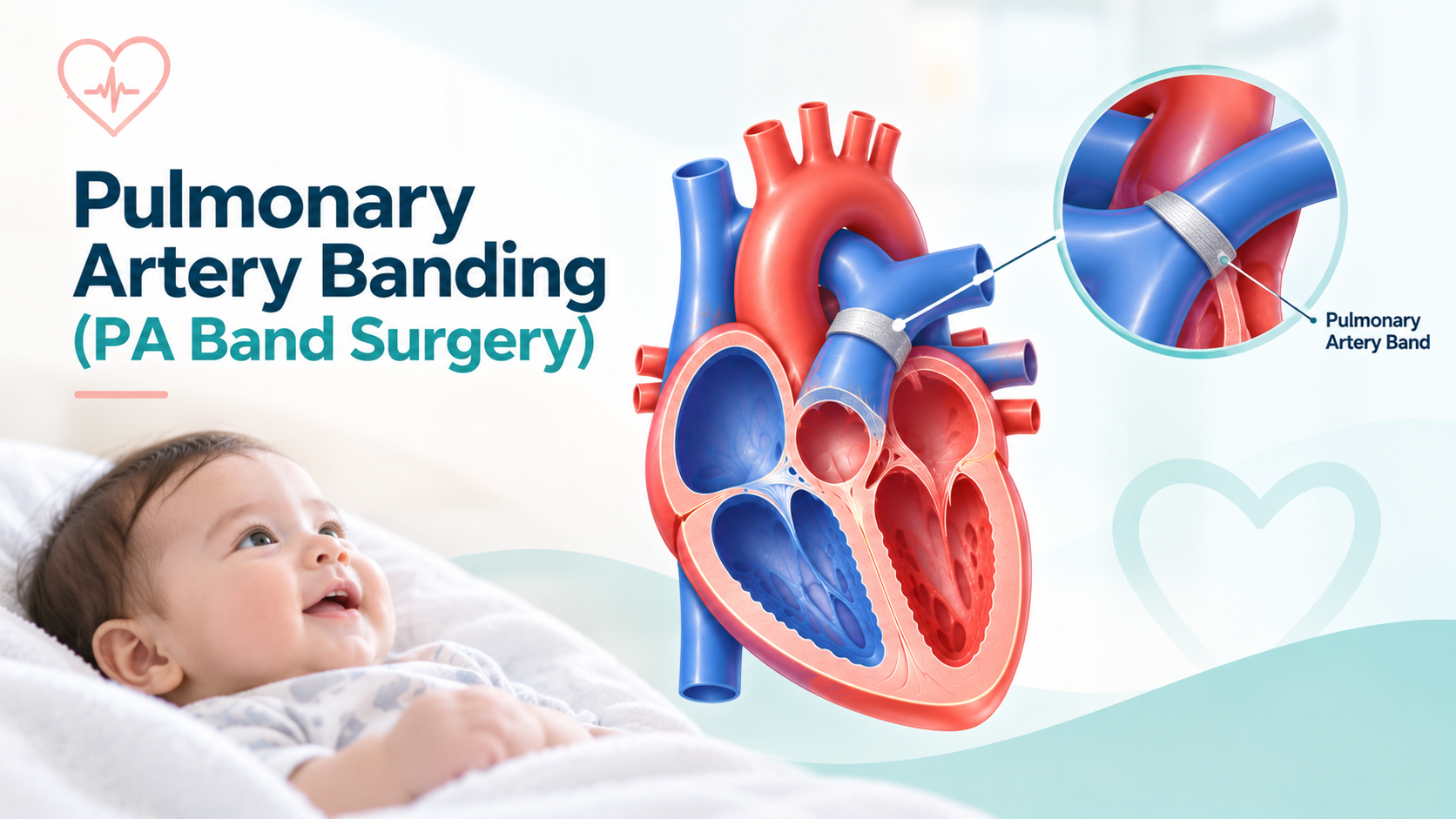
Pulmonary Artery Banding (PA Band Surgery) is a palliative congenital heart surgery performed to reduce excessive blood flow to the lungs in babies and children with certain complex congenital heart defects.
In this procedure, a special band is placed around the pulmonary artery to partially narrow it and control blood flow from the heart to the lungs. This helps reduce pressure on the lungs and prevents heart failure until a definitive corrective surgery can be safely performed.
PA band surgery is commonly used in infants with congenital heart defects that cause increased pulmonary blood flow.
Why is PA Band Surgery Needed?
Certain congenital heart defects allow too much blood to flow into the lungs, causing:
- Rapid breathing
- Heart failure
- Poor growth
- Pulmonary hypertension
- Increased strain on the heart
Pulmonary artery banding helps protect the lungs and stabilize the child before complete heart repair.
Conditions That May Require PA Band Surgery
PA banding may be recommended in children with:
- Large Ventricular Septal Defect (VSD)
- Atrioventricular Canal Defect (AVCD)
- Double Outlet Right Ventricle (DORV)
- Single ventricle heart defects
- Transposition of the Great Arteries (TGA)
- Complex congenital heart disease with excessive lung blood flow
A specialized Pediatric & Adult Congenital Heart Surgeon carefully evaluates each child to determine the best timing and treatment approach.
Symptoms That May Indicate the Need for PA Band Surgery
Common Symptoms in Infants
- Rapid breathing
- Difficulty feeding
- Poor weight gain
- Excessive sweating
- Frequent respiratory infections
- Fatigue
- Signs of heart failure
Early surgical intervention can help improve breathing, growth, and overall heart function.
Diagnosis Before PA Band Surgery
Several tests are performed to assess the child's heart condition and surgical needs.
Diagnostic Tests Include:
- Echocardiography (2D Echo)
- ECG
- Chest X-ray
- Cardiac CT or MRI
- Oxygen saturation monitoring
These investigations help the congenital heart team plan the safest and most effective surgery.
How is PA Band Surgery Performed?
PA band surgery is performed under general anesthesia by an experienced congenital heart surgeon.
During the Procedure:
- A small surgical incision is made in the chest
- A synthetic band is placed around the pulmonary artery
- The band is adjusted carefully to control lung blood flow
- Heart function and blood pressure are monitored throughout the procedure
The surgery helps reduce excessive pressure in the lungs while preparing the child for future corrective surgery.
Benefits of Pulmonary Artery Banding
Advantages of PA Band Surgery:
- Protects the lungs from high blood pressure
- Reduces symptoms of heart failure
- Improves feeding and weight gain
- Stabilizes heart function
- Allows safer timing for definitive heart repair
In many cases, PA banding is a temporary but lifesaving procedure.
Risks and Complications
Like all heart surgeries, PA band surgery carries some risks, although it is generally safe in experienced hands.
Possible Risks Include:
- Infection
- Bleeding
- Arrhythmias
- Band displacement
- Residual pressure problems
- Need for additional surgeries
Close monitoring by pediatric cardiac specialists helps minimize complications.
Recovery After PA Band Surgery
Most children recover gradually after surgery with specialized cardiac care.
Recovery Guidelines:
- Monitoring in pediatric cardiac ICU
- Regular follow-up echocardiograms
- Nutritional support
- Medications if required
- Gradual return to feeding and activity
Recovery time varies depending on the child's overall condition and underlying heart defect.
Long-Term Outlook After PA Band Surgery
PA band surgery is usually part of a staged treatment plan for congenital heart disease.
Long-Term Care May Include:
- Definitive corrective heart surgery
- Follow-up with congenital heart specialists
- Ongoing monitoring of heart and lung function
- Lifelong congenital heart care in some patients
With proper treatment and expert follow-up, many children go on to live healthy and active lives.